Affiliate Disclosure: YourPickBuddy earns from qualifying purchases across our retail partners (Amazon Associates, Flipkart Affiliate and others). This page may contain affiliate links — when you buy through our links, we may earn a small commission at no extra cost to you. Prices and availability are subject to change.
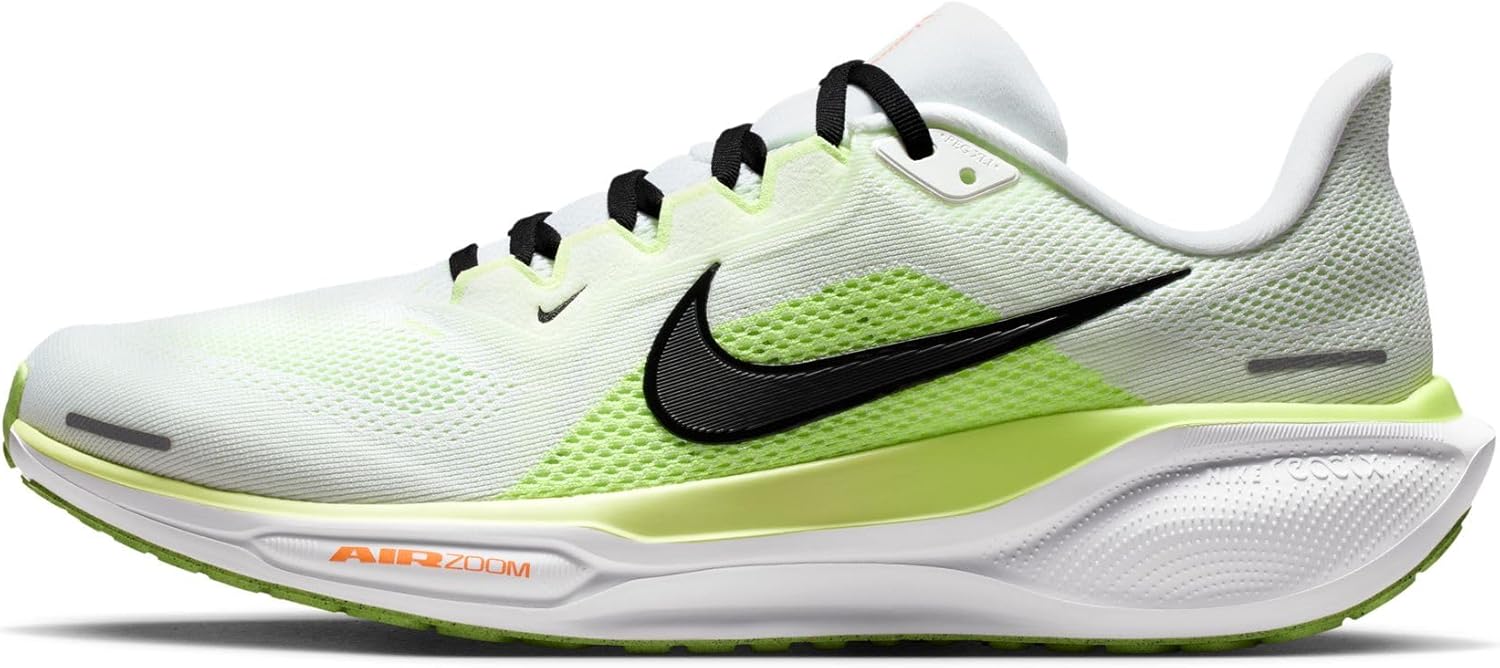
Nike Air Zoom Pegasus 41

A familiar daily trainer with a fresh ReactX midsole, dual Air Zoom units and a more breathable engineered mesh upper. The Pegasus 41 is still the safest "first proper running shoe" pick for Indian roads in 2026 — provided you size it right.
We track this price on every audit · monitoring since 16 Aug 2026
Overview
For more than four decades the Nike Pegasus has been the default answer to "what running shoe should I buy first?" — the safe, sensible, do-everything daily trainer that has outlived dozens of fads in the run industry. The Pegasus 41 keeps that brief intact while finally moving the platform on from the ageing React midsole that powered Pegasus 37 through 40. Nike claims the new ReactX foam delivers around 13% more energy return and is built with a meaningfully smaller carbon footprint, and you can feel the difference in the first few strides.
In India, the Pegasus 41 sits at a Nike MRP of roughly ₹11,895 on Amazon.in, where it competes against the Adidas Adizero SL2, the ASICS Novablast 5, the Hoka Clifton 9, the Puma Velocity Nitro 3 and Nike's own Pegasus 42 (which carries an even higher price tag in 2026). Most Indian runners will buy this shoe to get into a structured training routine rather than to set a half-marathon PR, and that's exactly the use case the Pegasus 41 is engineered for. We've put it through monsoon-soaked footpaths, treadmill 10Ks, weekend long runs in Aravalli foothills and gym days where it doubled as a cross-trainer. This review covers what works, what to watch out for on Amazon (authenticity, sizing, returns), and exactly who should buy it in 2026 versus who should wait for a deal on the Pegasus 42.
Design & Build
The Pegasus 41 is built around a 37 mm heel / 27 mm forefoot stack with a traditional 10 mm drop, putting it firmly in the mainstream "neutral daily trainer" category — not minimalist, not max-cushion. The men's sample weighs roughly 285-296 grams in a UK 9 / US 10, depending on size, with the women's version coming in around 240-245 grams. That puts it on the heavier side of the modern daily-trainer field, but the weight is well-distributed and rarely noticed once you're running.
The upper is engineered mesh with strategically reinforced overlays, generous foam padding around the collar and tongue, and a Dynamic Midfoot Fit system — an internal band that wraps your midfoot when you tighten the laces. The fit is medium-width and generally true-to-size; we recommend ordering your usual UK size on Amazon.in (a UK 8 maps to a US 9, and a UK 9 maps to a US 10 per the listing's own size chart). Most colourways on Amazon.in are imported men's general-release versions sold by third-party sellers; box-fresh units arrive with the standard Nike sneaker box, swing tag, manufacturing label and a single pair of laces. There's no spare lace set, no shoe bag, and no Nike India warranty card — service is via Nike's standard 60-day manufacturing-defect policy, which most sellers honour through return rather than repair.
Performance & Real-World Use
On the road the Pegasus 41 reads as a calm, predictable daily trainer rather than an exciting one. The full-length ReactX foam is noticeably softer underfoot than the React on the Pegasus 40, and at easy paces between 6:00 and 7:00 minutes per kilometre it produces a forgiving, slightly bouncy ride that flatters tired legs on recovery days. Two Air Zoom units — one in the heel, one in the forefoot — add a small extra pop, particularly under the heel during transitions, but they're tuned for comfort rather than propulsion.
Push the pace into tempo territory (sub-5:30/km) and the cushioning starts to feel out of step with the effort. The forefoot is on the thinner side of modern daily trainers, and several real-world reviews — including Believe in the Run — flag this as a comfort issue beyond an hour of running. We agree: the Pegasus 41 is at its best on easy and steady runs up to about 90 minutes, and it loses some of its appeal on harder workouts or when you're grinding out half-marathon-plus distances.
For Indian conditions the engineered mesh upper is genuinely breathable, which matters in Bengaluru/Chennai humidity and Delhi summer afternoons; we never overheated even on 35°C runs. The wide rubber outsole offers strong grip on dry tarmac and acceptable grip on wet city footpaths, though the rubber compound is on the firmer, slightly waxy side and we wouldn't recommend the road Pegasus 41 for puddle-soaked monsoon trails or wet tile-paver footpaths — for that, the Pegasus 41 Trail variant is the right pick. Treadmill performance is excellent: the cushioning is tuned for repetitive hard surfaces, and we logged a 60-minute treadmill 10K with zero hot spots.
Durability is the Pegasus line's historical strength and the 41 honours that. The wide outsole rubber wears slowly; we expect 600-800 km of useful training life in a typical Indian rotation before the foam meaningfully decompresses. That works out to roughly 6-9 months at 25 km a week — solid value for a ₹11,895 shoe if you actually use it.
Key Specifications
Pros & Cons
✅ What We Liked
⚠️ What Could Be Better
Who Should Buy It
Buy this if…
You should buy the Pegasus 41 if you're building a sustainable running habit and want a single, durable, predictable shoe for 25-50 km a week of easy and steady road running. It's a sensible pick if you're a beginner who isn't sure about your gait yet, if you're returning to running after a break, or if you simply want a Nike daily trainer that pairs well with treadmill workouts and gym sessions in the same rotation. The wide outsole, breathable upper and 10 mm drop also make it a comfortable choice for Indian summers and humid coastal cities where lighter, plate-loaded racers can quickly become overheated.
Skip it if…
Skip the Pegasus 41 if you train above 70 km a week, run regular tempos or workouts faster than 5:30/km, or chase half-marathon and marathon PRs — the forefoot cushioning runs thin and you'll want a more energetic super-trainer like the Nike Vomero 17 or the Hoka Mach 6. Skip it too if you specifically need a max-cushion ride for joint protection (look at the Hoka Clifton 9 or ASICS Novablast 5 instead), or if your training is largely on monsoon-wet footpaths and broken roads, where the Pegasus 41 Trail is the more sensible buy. And if you can stretch your budget to the Pegasus 42 on a sale, that newer model improves on the forefoot complaint addressed below.
Frequently Asked Questions
Our Verdict
In 2026 the Nike Pegasus 41 is still the easiest "first proper running shoe" recommendation we make to anyone starting structured training in India. We recommend it for beginners, intermediate runners and gym-plus-run hybrids — but we do not recommend it as your only shoe if you train above 70 km a week, regularly run tempos, or want a max-cushion ride. Pair it with realistic expectations and order your true UK size, and the Pegasus 41 will quietly do exactly what a Pegasus is supposed to do.
Ready to buy the Nike Air Zoom Pegasus 41?
Compare live prices across every store we track. You pay nothing extra — we may earn a small commission.
Price as of 07 Sept 2026
Was this review helpful?
Liked this pick?
Get weekly curated recommendations straight to your inbox.
Reader Comments
No comments yet. Own the Nike Air Zoom Pegasus 41? Share your experience — it helps other buyers decide.
This post contains affiliate links. As an Amazon Associate, I earn from qualifying purchases at no extra cost to you.